
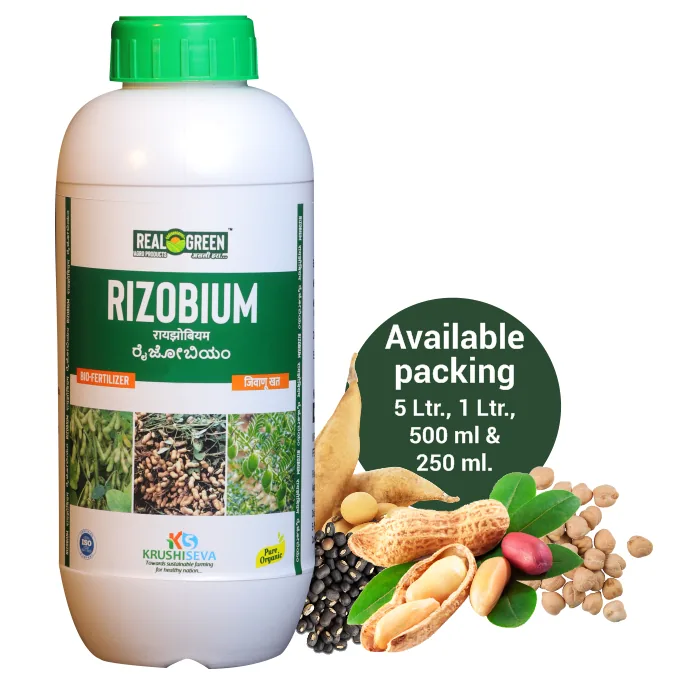
Standard bio-fertilizers
Rhizobium
Forms nitrogen-fixing nodules on compatible legume roots.
₹320 · 500 ml / ₹570 · 1 L / ₹2,400 · 5 L
Protect crop-compatible seed treatment.
CROP GUIDE · EDUCATION
Review soil condition and the legume nutrient plan, including diagnosed deficiencies.
Assess the nutrient plan for this legume rather than borrowing a cereal schedule. Soil information helps identify the need for additional nutrients.
Incorporate mature organic inputs during preparation and keep the soil-management plan suitable for rooting and pod development.
Use a groundnut-compatible inoculant. Keep treated seed protected from direct heat and follow the pack’s handling and sowing instructions.
Soybean inoculant cannot be assumed suitable for groundnut.
Use the current pack directions for dose, method, crop compatibility and expiry. Share a photograph of the label for individual guidance. A crop name alone does not establish a suitable dose.
Keep sealed in a cool, shaded place. Check the batch and expiry before use. Do not mix microbial products directly with pesticides, disinfectants or concentrated fertilizers unless the label permits it.
Your crop variety, acreage or tree count, crop age, soil test, irrigation method, recent fertilizers and delivery location. These details are more useful than a crop name alone.
Effective nodulation depends on a suitable association between the crop and bacterial strain. The product name alone is insufficient.
Do not make that change automatically. Discuss a soil-test-based nutrient plan with a local agricultural adviser.
General educational summary reviewed 19 October 2026. University guidance explains agronomy; it does not certify Real Green product efficacy. Use local recommendations and the current product label.
A starting point for discussion, subject to the current label. Not a prescribed package.
Standard bio-fertilizers
Forms nitrogen-fixing nodules on compatible legume roots.
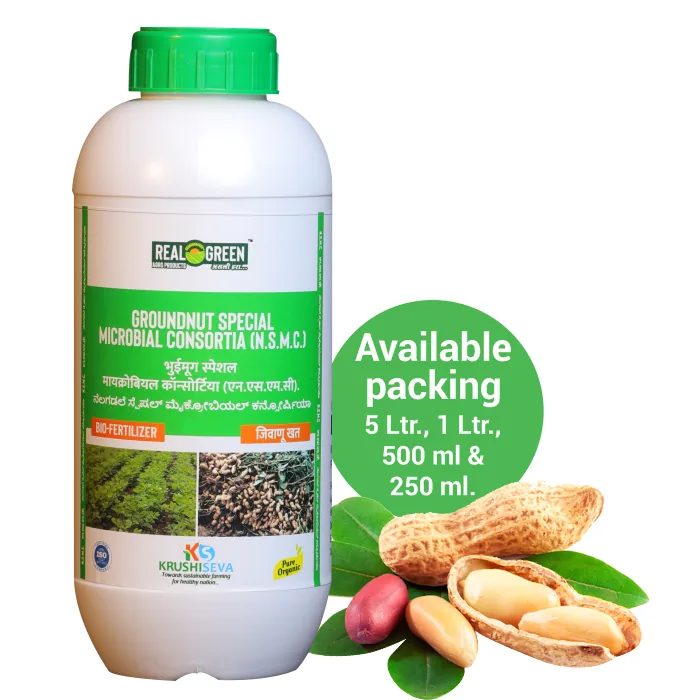
Crop-specific consortia
A crop-compatible culture for groundnut. Check the pack before seed treatment or soil application.